




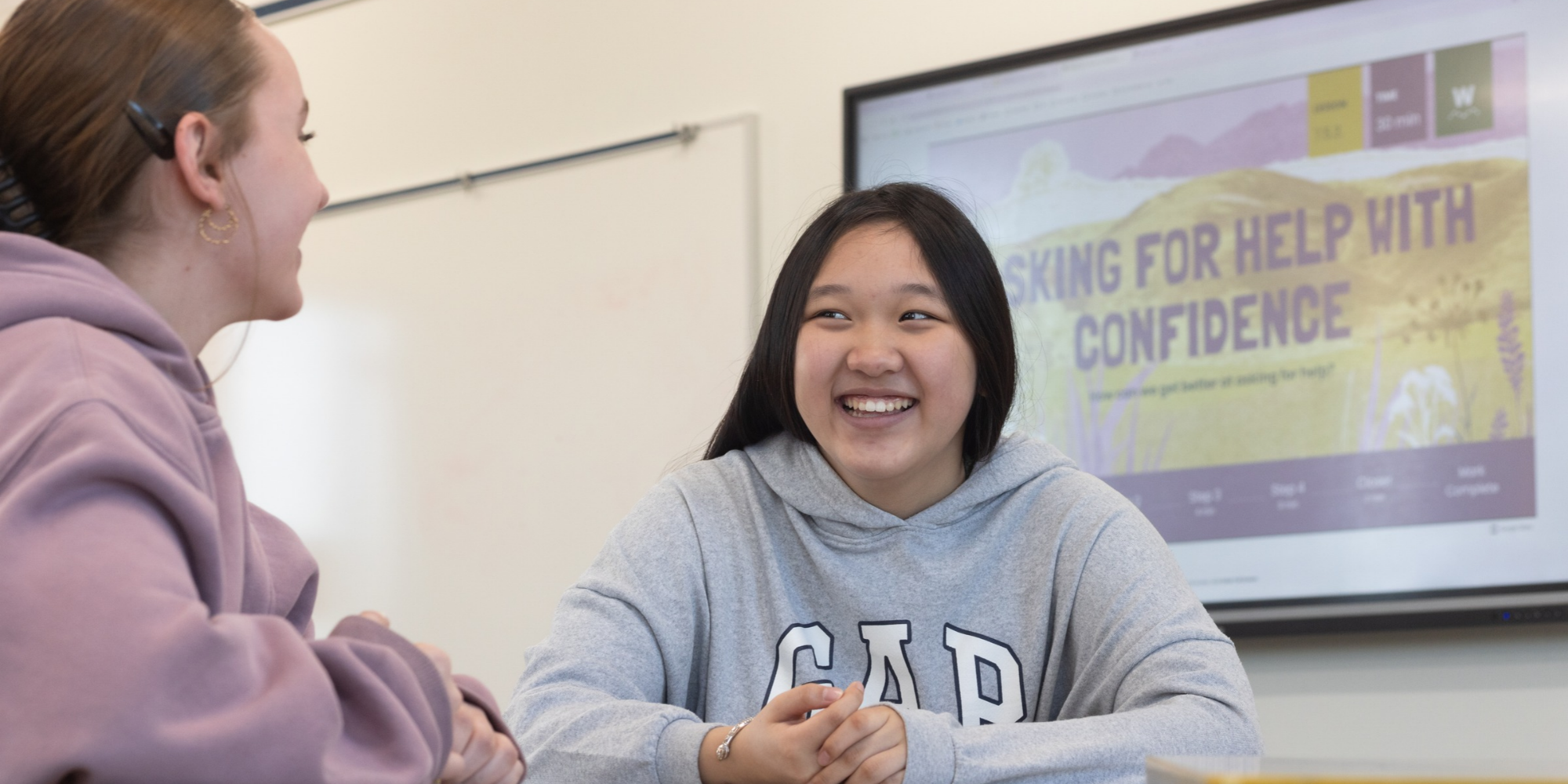
Middle school students in Oshkosh, Wisconsin, explain what Wayfinder activities mean to them—from Monday mornings to life after graduation.
What do middle schoolers say they learn from Wayfinder activities? At Vel Phillips Middle School in Oshkosh, Wisconsin, sixth and seventh graders described skills they use right now: code switching in different contexts, adapting when situations aren’t ideal, working with classmates they don’t know as well, and picturing life after graduation.
Vel Phillips Middle School opened in the 2023-24 school year and serves 800+ students in grades 6-8. It sits on the north side of Oshkosh, in east-central Wisconsin, and brought together students from the former Merrill Middle and Webster Stanley Middle School communities. It’s named for Vel Phillips, a Wisconsin civil rights leader and legal pioneer who was the state’s first female Secretary of State.
Last year was the school’s first year with Wayfinder. To see how it lands with students, our team spent a morning at Vel Phillips and talked with middle school students after their lessons. What follows comes from those conversations, in students’ own words.
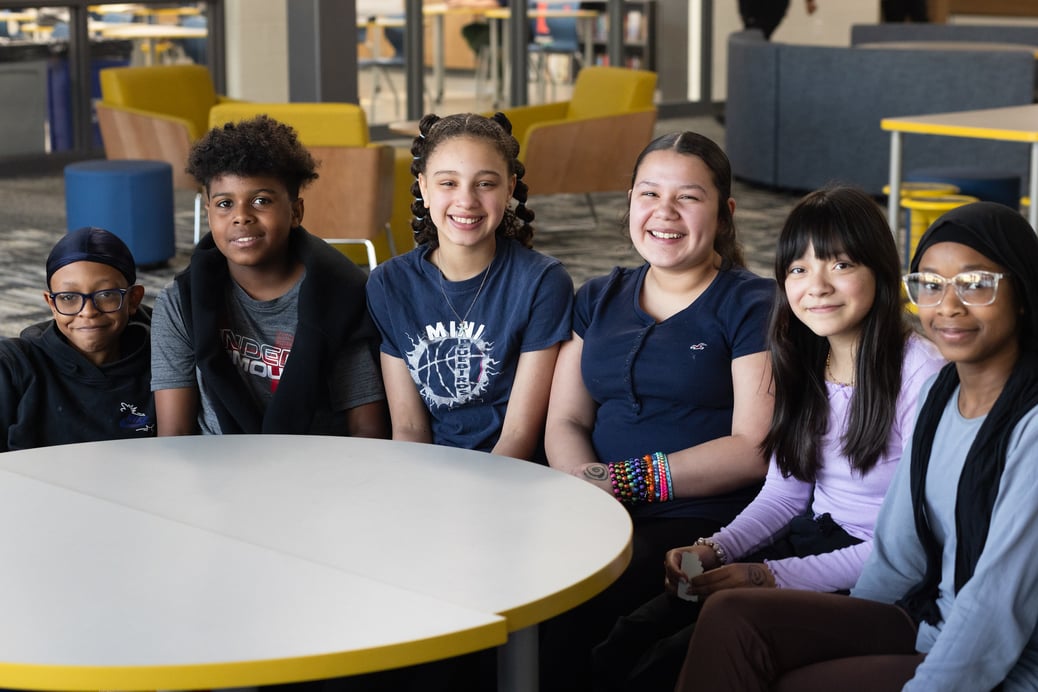
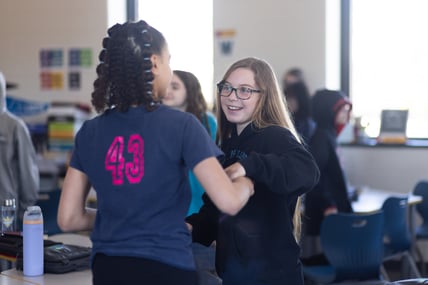
Sixth graders during a Wayfinder activity at Vel Phillips Middle School
How Do Wayfinder Activities Change the Start of a Middle School Day?
Students at Vel Phillips said Wayfinder activities “get you ready and energetic” for the day. Seventh graders described doing the activities on Monday, Wednesday, and Friday, and sixth graders pointed to Mondays, when some classmates aren’t happy the weekend is over.
“Some people are just really upset that they have to be here, especially on Mondays,” one sixth grader said. “But sometimes the Wayfinder activities hype up the mood.”
 What Does Self-Awareness Look Like for a Middle Schooler?
For middle schoolers, self-awareness means noticing how you act and how it lands. After a Code Switch lesson, sixth graders described acting differently with friends than with adults. A seventh grader explained what’s at stake: without self-awareness, you can hurt people without realizing it.
Self-Awareness is the first of Wayfinder’s six Core Skills, and we describe it as understanding yourself on many levels. The Code Switch lesson turns that big idea into something students can try on: they acted out how they’d behave in different situations, then talked about why.
When asked what happens without self-awareness, the seventh graders’ answers were blunt:
“You could find yourself doing stuff that you normally wouldn’t do,” said one student.
“Maybe you could not be a good friend to your friends, and then your friends don’t want to be friends with you anymore, because you’re not aware of what you’re doing,” said her classmate. “You could be hurting people.”
How Do Middle Schoolers Practice Adaptability?
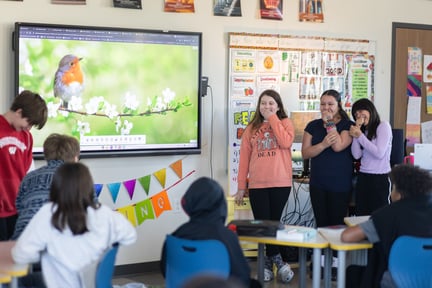
During one lesson, sixth graders prepared scenes in small groups, then had to combine two groups’ scenes in front of the whole class without rehearsing together. “We made it so that everyone could join in,” one student said about adjusting to get the whole group on board.
Seventh graders defined “adaptability” as adjusting “to situations that might not be your ideal right now… Situations you’re uncomfortable with, you learn to adapt with them, and know how to be in those situations, even though you feel uncomfortable.”
What Does Empathy Mean to a Seventh Grader?
Seventh graders described empathy as putting yourself in someone else’s shoes so you can be there for them. They connected it to a health class unit on mental health and to everyday moments, like supporting a friend who’s struggling.
Wayfinder’s definition of Empathy is being “in tune with the feelings and needs of others and willing to act for a common good.” Students got to the same place on their own: “You want to put yourself in other people’s shoes to know what they’re going through so that you could be there for them,” one said.
Another student described empathy as “how to be there for a person when they’re struggling.”
How Does Collaboration Show Up in a Middle School Classroom?
Students said collaboration often means working with classmates they wouldn’t choose. Seventh graders said being put in groups with people they don’t know teaches them to work with anyone. Sixth graders named the hard part: getting a group to do one thing at the same time without getting frustrated.
“Sometimes we get put into groups with people we don’t know,” a seventh grader said. “It teaches you to accept everybody.”
When frustration hit, sixth graders’ coping moves were simple—take a breath, take a break, and think about something happy.
What Does Agency Mean to a Seventh Grader?
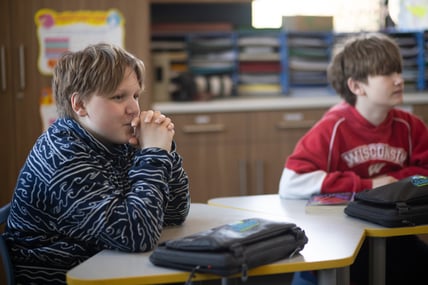
Seventh graders hadn’t heard the word agency, but they understood the idea once it was explained: doing things for yourself instead of depending on others. They said it matters for when they’re older, and they named collaboration, independence, and empathy as school skills they expect to use after graduation.
Wayfinder describes Agency as understanding “the value of your voice.” Students put it in their own terms. “It’s important for when you’re older, so you can do stuff for yourself, and you don’t depend on other people,” one said. Another pointed to learning to be independent “so you don’t depend on other people to do it for you.”
How Do Purpose and Belonging Show Up for Middle Schoolers?
Students demonstrate purpose when their values guide how they make decisions and connect with others. Middle schoolers at Vel Phillips named excitement around current career goals like cosmetology, professional basketball and soccer, art, and working with cars. One sixth grader tied purpose and belonging together while explaining why basketball feels different from class: it’s where they know why they’re there and who they’re there with.
“In basketball, I feel like I have a purpose to be there, and I know I belong, because I know all my teammates, my teammates are my best friends,” the student said.
That’s the idea behind Purpose, Wayfinder’s sixth Core Skill: decisions and interactions guided by a deep connection to your values.
What Can School and District Leaders Learn From Student Voices?
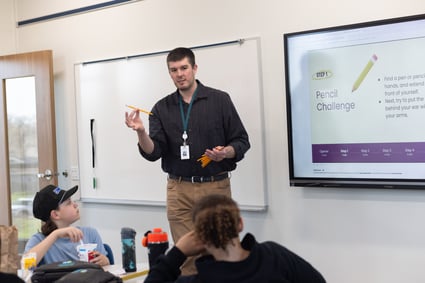
Students at Vel Phillips connected future-ready skills to Monday mornings, friendships, group projects, and the careers they want to have. Their words show how a skill lands in daily middle school life.
For another look at a Wayfinder partner middle school, check out “Belonging is an Academic Strategy”: Insights from a Wayfinder Partner Middle School. You can also explore more Wayfinder case studies.
Want to bring more belonging into your middle school? Get the Belonging in Middle School Resource Pack, with research-backed teaching and learning strategies for leaders and educators supporting students in grades 6-8, plus some of Wayfinder’s most-loved activities and lessons for each grade. Or schedule a demo to see how Wayfinder could work in your schools.
Frequently Asked Questions
What Are Future-Ready Skills?
Future-ready skills drive success in school, work, and life—no matter how the world changes. Often called durable or 21st century skills, they prepare students to navigate challenges, build meaningful relationships, and make a positive impact.
What Are Wayfinder’s Six Core Skills?
Wayfinder's six Core Skills are Self-Awareness, Adaptability, Empathy, Collaboration, Agency, and Purpose. Learn how we define each of those skills here.
What Does Wayfinder’s Middle School Curriculum Include?
Wayfinder’s middle school curriculum is designed to help middle schoolers understand and value themselves—and each other. It includes grade-level themes and an Activity Library of quick, no-prep activities ranging from two to 20 minutes.
How Often Do Middle School Students Do Wayfinder Activities?
This varies from school to school! Seventh graders at Vel Phillips Middle School told us they do Wayfinder activities on Mondays, Wednesdays, and Fridays.
Click here to learn more about Wayfinder's middle school implementation.
Last Updated: October 28, 2026
